The short version
Mole control uses trapping by experienced technicians to remove the insectivores causing surface ridges and mounds. no-charge inspection and workmanship warranties ensure results.
- Moles eat earthworms and grubs, not plant roots, but their tunneling damages lawns.
- Professional trapping is the most effective method; DIY often fails.
- Peak activity in spring and fall when soil is moist and worms are near surface.
- Trapping programs typically cost $150-$450 with a workmanship warranty.
- call for a no-charge inspection and tailored plan.
Whether you've tried repellents, smoke bombs, or grub treatments with no success, or you're seeing fresh tunnels for the first time, you'll find actionable advice here. We focus on trapping because that's what works—no gimmicks, no fake warranties. This guide is for homeowners and property managers across the United States who are frustrated by mole damage and want a clear, honest explanation of how professional mole control works.
What to look for
For property managers, untreated mole issues can lead to tenant complaints and costly lawn restoration. In mild climates, they are active year-round. Peak mole activity occurs in spring and fall when soil moisture and earthworm populations peak. The real solution is removal of the mole itself. Many homeowners mistakenly believe moles eat grubs and try to eliminate them with insecticides, but this often backfires—killing earthworms reduces food for moles, but they simply dig deeper or move to another area. The result: unsightly ridges, volcano-shaped mounds, and a lumpy lawn that's difficult to mow or walk on. While they don't eat roots, their tunneling lifts grass away from the soil, causing it to dry out and die. A single mole can maintain an extensive tunnel system in loose, moist soil, creating extensive networks that collapse underfoot. Their primary food source is earthworms, which they hunt by digging shallow surface tunnels and deeper permanent runways. Moles are solitary, territorial insectivores that spend almost their entire lives underground.
- 1Surface ridges: raised, meandering lines of loosened soil that indicate active feeding tunnels.
- 2Volcano-shaped mounds: cone-shaped piles of soil from deep tunnel excavation, often in clusters.
- 3Spongy lawn: soil that feels soft or collapses underfoot due to tunnel voids.
- 4Fresh dirt piles: especially after rain or irrigation, when moles push out excavated soil.
- 5Wilting grass: patches of grass that turn brown as roots lose contact with soil.
- 6Flooded tunnels: water pooling in low areas from collapsed tunnels.
- 7Increased activity in spring/fall: new ridges appearing after wet weather.
Why it’s worth acting soon
- Extensive lawn damage requiring reseeding or sod replacement.
- Tripping hazards from uneven ground and hidden tunnels.
- Collapse of tunnels attracting other pests like voles or snakes.
- Soil erosion and water runoff issues from destabilized turf.
- Increased mole population as neighboring moles move into vacated territories.
Treatment options and typical costs
Professional Trapping Program
$150-$450
Technicians set specialized traps (e.g., scissor-jaw or harpoon) in active tunnels. Traps are checked and reset until removal is confirmed. Typically 2-4 visits over 1-3 weeks.
- Time
- 1-3 weeks
- Best for
- Most mole infestations; complete removal.
Baiting with Poison Worms
$200-$500
Synthetic worm baits laced with poison (e.g., bromethalin) are placed in tunnels. Effective but slower than trapping; worms must be consumed. Not always successful if moles avoid bait.
- Time
- 2-4 weeks
- Best for
- Large properties where trapping is impractical; ongoing maintenance.
Exclusion & Habitat Modification
$300-$600
Installing underground barriers (e.g., wire mesh) along foundations or gardens, plus reducing soil moisture and earthworm habitat. Rarely standalone; used with trapping.
- Time
- Ongoing
- Best for
- Preventing re-entry after removal; protecting specific areas.
Prices are typical published ranges. Ask what’s included before you compare quotes.
 Round, volcano-shaped mounds come from deeper mole tunnels. Gopher mounds are crescent-shaped with a plugged hole.
Mole Biology & Behavior: Why Trapping Works.
Moles create two types of tunnels: shallow feeding tunnels just below the surface (the ridges you see) and deeper, permanent runways (a few feet deep) used for nesting and travel. Trapping works because moles instinctively push soil upward to repair tunnel damage, springing a trap set in an active runway. Professional trappers identify active tunnels by depressing the ridge and waiting for re-elevation within 24-48 hours. This ensures traps are placed in high-traffic areas. Moles are active year-round but more visible in spring and fall when soil moisture is high and earthworms are near the surface. In summer, they may dig deeper to avoid heat. In winter, they remain active below the frost line. Trapping success is highest during peak activity when moles are expanding their tunnels daily. Moles are not rodents; they are insectivores in the family Talpidae. They have poor eyesight but a keen sense of smell. Their cylindrical bodies, powerful forelimbs, and large claws are adapted for digging. A mole's territory can span a large yard, but they are solitary except during breeding season. Moles eat mostly earthworms. Their saliva lets them store live earthworms for later. Understanding these behaviors is key to control.
The Trapping Process: Step by Step.
Technicians wear gloves to minimize human scent and often use bait like earthworms or commercial attractants. Traps are checked every 1-2 days. Once a mole is caught, it is removed and the tunnel is collapsed. The process repeats until no further activity is seen for at least a week. A workmanship warranty: if moles return within a specified period (typically 30-90 days), confirm the written re-treatment terms before you book. This reflects confidence in professional trapping methods and provides peace of mind. The entire process usually takes 1-3 weeks, depending on the number of moles and property conditions. A professional mole control program begins with a no-charge inspection. The technician walks your property, looking for fresh mounds and ridges. They use a probe or foot to collapse a section of tunnel and mark it. If the tunnel is repaired within 24-48 hours, it's active. Active tunnels are where traps are set. Common traps include the scissor-jaw trap (placed in the tunnel, triggered by soil movement) and the harpoon trap (spears the mole as it pushes up). Traps are set in pairs at multiple active tunnels to increase odds.
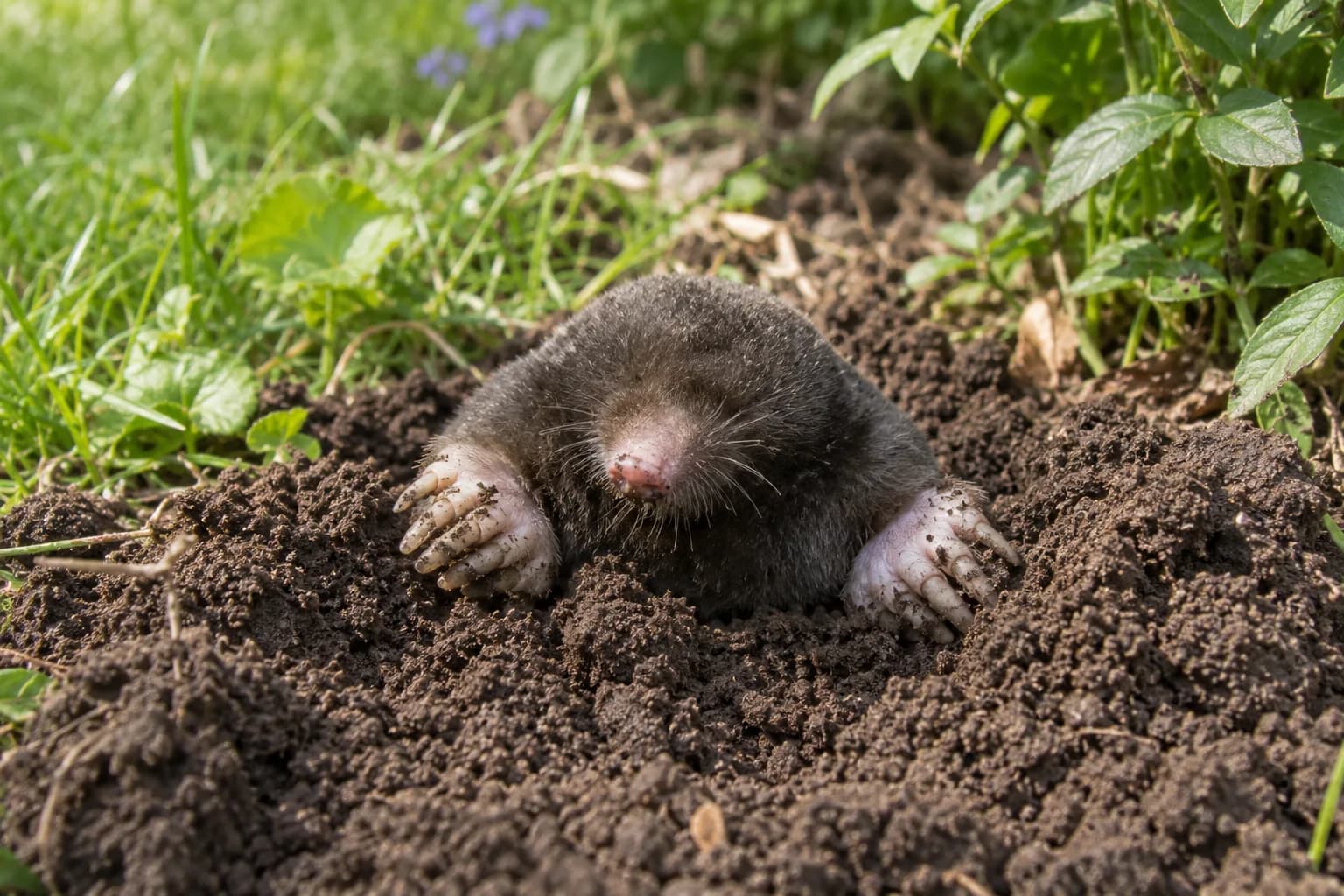 Moles have big, spade-like front feet built for digging. They eat earthworms and grubs, not plants.
Why Grub Treatments Don't Work for Moles.
Even if you eliminate all grubs, moles will continue tunneling for earthworms. The only way to stop mole damage is to remove the mole itself. Professional trapping is the most targeted and effective approach. Some companies offer grub treatments as a preventive measure, but they should never be considered a mole control solution. Always verify that your pest control provider uses trapping, not just chemical treatments. A common misconception is that moles eat grubs (Japanese beetle larvae, etc.) and that killing grubs will starve moles. In reality, earthworms make up most of a mole's diet, with grubs being a minor supplement. Applying insecticides to kill grubs can actually reduce earthworm populations temporarily, but moles will simply travel farther to find food or switch to other prey. Moreover, many insecticides are harmful to beneficial soil organisms and pollinators.
What affects the price
- Number of moles: more moles require more traps and visits.
- Property size: larger yards may need more extensive monitoring.
- Soil type: heavy clay or rocky soil makes trapping harder.
- Severity of infestation: extensive tunnel networks take longer to clear.
- Accessibility: difficult-to-reach areas (slopes, wooded lots) increase time.
- Geographic region: labor rates vary across the US (e.g., Northeast vs. South).
- workmanship warranty: programs with a warranty may cost slightly more.
📊
What's your biggest frustration with moles?
When to call for help
Don't wait until your lawn is a patchwork of dead grass and dirt piles. A no-charge inspection should confirm the species, locate active tunnels, and provide a targeted plan. DIY methods like vibrating stakes, castor oil, or grub treatments rarely solve the problem and can waste time and money. Call a professional as soon as you notice fresh mounds or ridges, especially if they appear over multiple days.
What you can do yourself
A workmanship warranty usually means re-treatment is covered if the problem returns. For a one-time investment of $150-$450, a professional program often saves money compared to repeated failed DIY attempts. They also understand local regulations and safe handling of traps. Professional technicians have the experience to identify active tunnels, set traps correctly, and follow up until the mole is caught. While some homeowners have success with traps after studying mole behavior, most find that moles quickly avoid or bypass DIY efforts. DIY mole control typically involves repellents (castor oil, ultrasonic devices), poison baits, or home-made traps.
Where you live matters
Mole control is available across the country, with methods adapted to local soil and species. No matter where you live, the core solution remains the same: professional trapping. Sandy soils in coastal areas allow faster tunnel construction, leading to more surface damage. Soil type matters: heavy clay soils in the Midwest make tunneling harder, so moles are more likely to use existing runways. In arid regions like the Southwest, moles are limited to irrigated lawns and golf courses. In northern states, activity slows in winter but doesn't stop completely. In the South, moles are active year-round, with peak in spring and fall. Regional climate also affects timing. Knowing your local species helps technicians tailor trapping techniques. All species cause similar lawn damage, but their tunneling depth and activity patterns can differ slightly. The star-nosed mole (Condylura cristata) inhabits wet areas in the Northeast and Upper Midwest. In the West, the Townsend's mole (Scapanus townsendii) is larger and found in moist coastal areas of Oregon and Washington. It prefers loose, sandy loam soils. In the eastern US, the Eastern mole (Scalopus aquaticus) is most common, found from Texas to Massachusetts. Mole species vary by region.
Simple ways to keep moles away
- Reduce soil moisture by improving drainage and fixing leaky irrigation.
- Limit earthworm habitat? Not recommended; earthworms benefit soil. Instead, focus on removal.
- Install underground fencing (hardware cloth, 1/4-inch mesh, 24 inches deep) around gardens.
- Maintain a healthy lawn that can recover from minor tunneling.
- Keep grass mowed and soil compacted? Moles prefer loose soil; aeration may help but not prevent.
- Remove debris and woodpiles that shelter moles' prey.
- After removal, fill tunnels with topsoil and reseed promptly.
 Ask what the quote covers if another mole moves in after the first one is caught.
Did you know?
A mole can eat a large amount of insects every day—
Mole saliva lets them store live earthworms for later.
The star-nosed mole has 22 fleshy tentacles on its snout that can detect and identify prey in milliseconds.
Questions people ask
Do moles eat plant roots?
No, moles are insectivores and eat earthworms, grubs, and other soil insects. They do not eat plant roots, but their tunneling can damage roots by drying out the soil.
How much does professional mole control cost?
Typical trapping programs range from $150 to $450, depending on the number of moles, property size, and region. Ask whether the inspection is credited toward the work and whether the warranty is written.
How long does it take to get rid of moles?
With professional trapping, most infestations are resolved in 1-3 weeks. Traps are checked every 1-2 days until no new activity is seen.
What is the best time of year for mole control?
Spring and fall are peak activity periods when moles are most visible, but trapping works year-round. Moles are active even in winter below the frost line.
Can I use grub killers to get rid of moles?
No, grub killers do not effectively eliminate moles because moles primarily eat earthworms, not grubs. Professional trapping is the most effective method.
Do mole repellents like castor oil work?
Castor oil-based repellents may temporarily drive moles away, but they often return once the repellent degrades. They are not a reliable long-term solution.
How many moles are typically in a yard?
Moles are solitary. Usually, one to three moles inhabit a property, but their territories can overlap. Trapping often removes all moles present.
Will moles eventually leave on their own?
No, moles will stay as long as food is plentiful. They do not migrate unless food runs out, which is rare in established lawns.
Is an annual mole control contract worth it?
It can be, if the animal keeps coming back. In Mole Treatment, a seasonal contract often costs little more than a single visit while covering the peak activity months. In Mole Treatment, compare what each plan includes and ask whether follow-up visits are covered before you commit.
Sources (5)
The facts in this article come from the public sources listed above. Every home is different, so ask the company you talk to about pricing and what’s included. Published by Mole Exterminator · Updated September 11, 2026 · How we write these guides