The short version
Moles are insectivores that tunnel for earthworms, not plant roots. Control focuses on trapping, habitat modification, and professional removal.
- Moles eat earthworms and grubs, not plants; healthy lawns with high insect populations attract them.
- Surface ridges and volcano mounds are classic signs; a single mole can maintain an extensive tunnel system
- Trapping is the most effective control method, best done in spring and fall when moles are most active.
- DIY repellents and poisons often fail; professional trapping programs cost $150–$450.
- Prevention focuses on reducing soil moisture and insect populations, but complete exclusion is difficult.
This guide is for homeowners and property managers frustrated by mole damage and seeking practical, proven solutions. Whether you’re considering DIY methods or ready to hire a professional, you’ll find evidence-based advice on identification, prevention, and cost-effective removal strategies—no gimmicks or unproven remedies.
What to look for
Control requires direct removal of the mole or drastic habitat modification. Eliminating grubs (which moles occasionally eat) rarely solves the problem, as earthworms are their preferred food. The real issue is that moles are a symptom of a healthy soil ecosystem—high earthworm populations. However, their tunneling can dry out roots and allow weeds to invade. Contrary to popular belief, moles do not eat plant roots. A single mole can excavate long stretches of new tunnel in a day, severely damaging lawns and landscapes. Volcano-shaped mounds of soil mark entrance and exit points. These tunnels lift the turf, creating ridges that can be several feet long. Their primary food source is earthworms, which they hunt by digging shallow surface tunnels and deeper runways. Moles are often mistaken for rodents, but they are insectivores belonging to the family Talpidae.
- 1Surface ridges (raised tunnels) that run in straight lines across the lawn.
- 2Volcano-shaped mounds of loose soil, typically 2–8 inches tall.
- 3Spongy or sunken areas where tunnels have collapsed.
- 4Uprooted plants or grass that feels loose due to underground tunnels.
- 5Increased weed growth along tunnel lines as soil disturbance exposes seeds.
- 6Mole activity most noticeable after rain or irrigation when soil is soft.
- 7Feces or insect parts near mounds (rarely visible).
Why it’s worth acting soon
- Tunnel networks expand rapidly, causing more extensive lawn damage.
- Root damage from drying out can kill grass patches, requiring reseeding.
- Moles attract predators like foxes or snakes to your yard.
- Collapsed tunnels create uneven ground that poses tripping hazards.
- If multiple moles establish territories, control becomes more complex and costly.
Treatment options and typical costs
Professional Trapping
$150-$450
pest control pros place scissor-jaw or harpoon traps in active tunnels. Traps are checked daily and removed once the mole is caught. This is the most effective method, with a high success rate.
- Time
- 1–2 weeks
- Best for
- Homeowners with persistent mole problems or large properties
DIY Trapping
$20-$60
Homeowners can purchase traps (e.g., Victor Out O'Sight) and set them following instructions. Requires identifying active tunnels and proper placement. Lower cost but higher effort and variable success.
- Time
- 2–4 weeks
- Best for
- Handy homeowners with one mole and patience
Exclusion and Habitat Modification
$50-$200
Installing underground barriers (e.g., hardware cloth) along fence lines or garden edges. Reducing soil moisture through drainage and watering less frequently can make the area less attractive.
- Time
- Ongoing
- Best for
- Prevention in small, high-value areas like gardens
Prices are typical published ranges. Ask what’s included before you compare quotes.
 Round, volcano-shaped mounds come from deeper mole tunnels. Gopher mounds are crescent-shaped with a plugged hole.
Mole Biology and Behavior.
In the US, the eastern mole (Scalopus aquaticus) and star-nosed mole (Condylura cristata) are common. Eastern moles are most widespread, favoring sandy loam soils in the eastern and central states. Understanding that moles are not rodents is key: they do not gnaw or eat plants. Their high metabolism requires them to tunnel constantly to find food, primarily earthworms. When worm populations are high, mole activity surges. They also store live, paralyzed worms in underground caches for lean times. Moles are solitary, insectivorous mammals that spend most of their lives underground. They have cylindrical bodies, velvety fur, and large front paws with strong claws adapted for digging. Their eyes are tiny and covered by skin, as vision is unnecessary in dark tunnels. They rely on touch and smell to find prey. Moles dig two types of tunnels: shallow surface tunnels for foraging (the ridges you see) and deeper runways (6–24 inches deep) that connect to nesting chambers. They are active day and night, with peaks in early morning and late evening.
Why Grub Control Often Fails.
Moreover, grub treatments (e.g., imidacloprid) can harm beneficial insects and earthworms indirectly. Overuse of pesticides reduces soil biodiversity and may not affect moles at all. The only reliable way to reduce mole activity is to remove the moles themselves or drastically alter the habitat to make it less attractive—for example, by compacting soil or reducing moisture. However, these measures can damage lawn health, so trapping remains the preferred approach. Many homeowners believe that eliminating grubs (like Japanese beetle larvae) will starve moles. However, earthworms make up most of a mole's diet. Grubs are eaten only when worms are scarce. Even if you completely eliminate grubs, moles will continue to thrive on earthworms, which are beneficial for soil health.
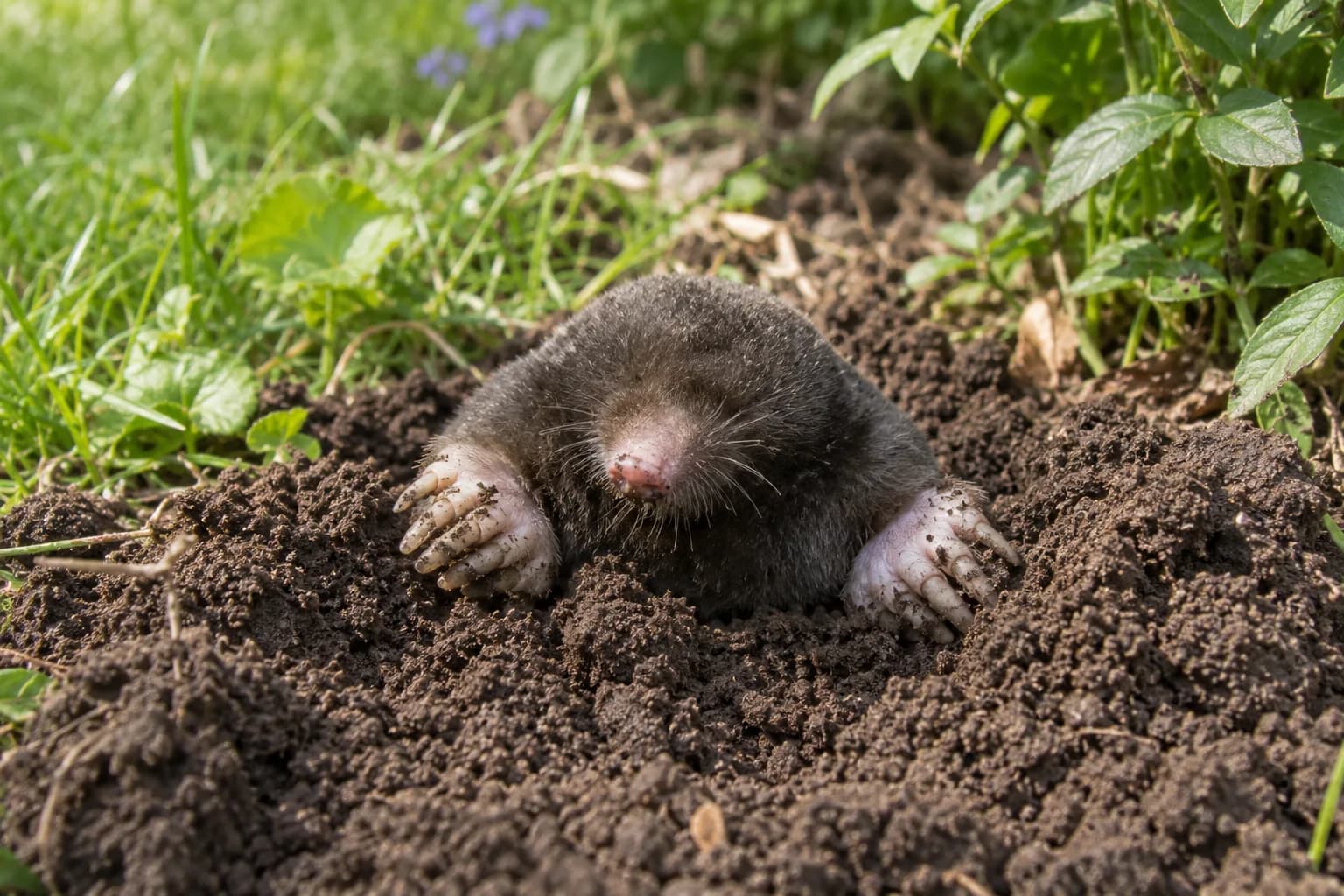 Moles have big, spade-like front feet built for digging. They eat earthworms and grubs, not plants.
Regional variations in Mole Control.
Western states like California have the broad-footed mole, which prefers sandy soils. Climate also matters: in the South, moles may be active even in winter, while in northern states, activity peaks in spring and fall when soil is moist and cool. Local earthworm populations influence mole density. For example, areas with heavy clay soils have fewer earthworms and thus fewer moles. Understanding your region's species and soil type helps in choosing traps and timing control efforts. Mole species and behavior vary across the US, affecting control strategies. In the Northeast and Midwest, eastern moles are prevalent and active in deep tunnels during winter. In the Southeast, they remain active year-round due to mild soil temperatures. In the Pacific Northwest, the Townsend's mole creates large mounds and is more aggressive in tunneling.
What to check before you hire mole control.
In Mole Prevention, because moles are solitary, several fresh ridges usually mean more than one animal. In Mole Prevention, before you hire, walk the yard and flatten a few ridges with your foot, then check back the next day — the ones that are raised again are the active runs a plan should target. In Mole Prevention, moles do not eat plants; they tunnel for earthworms, grubs, and soil insects, and the ridges they leave behind are what most people notice. In Mole Prevention, tunnels often run just under the surface, with deeper nesting chambers below, and a single mole can maintain an extensive system across a yard.
What affects the price
- Number of moles: More moles increase trapping time and cost.
- Property size: Larger lawns require more traps and visits.
- Accessibility: Obstacles like fences or slopes complicate trapping.
- Season: Spring and fall are peak activity; off-season may require more effort.
- Geographic region: Costs vary across the US; higher in urban areas.
- workmanship warranty: Some companies offer follow-up visits if new moles appear.
- Additional services: Some providers include grub control or lawn repair.
📊
What is your biggest frustration with moles?
When to call for help
no-charge inspection are available from companies like Mole Control; call Also, if you see multiple active tunnels across a large area, or if moles return after a self-treatment, a pro can assess the extent and implement a targeted trapping plan. If you have tried DIY methods without success, or if you are uncomfortable handling traps, it's time to call a professional.
What you can do yourself
DIY trapping can work for a single mole if you are diligent about identifying active tunnels and setting traps correctly. However, mistakes in placement or trap type often lead to failure, and handling dead moles is unpleasant. Professional services offer results that vary by property and provider, typically using multiple traps and daily monitoring. The cost difference ($20–$60 vs. $150–$450) is often worth the time saved and higher success rate, especially for large or persistent infestations.
Where you live matters
for a no-charge inspection tailored to your region. Regardless of location, trapping is most effective when soil is moist and moles are actively extending tunnels. Pacific Northwest moles, such as Townsend's, are notorious for damaging golf courses and parks. Western regions like California have broad-footed moles that build large mounds in irrigated lawns. Southern states experience year-round activity, with peak tunneling in spring and fall. In the Midwest, they are common in loamy soils of residential areas. In the Northeast, eastern moles create extensive surface tunnels in spring after snowmelt. Mole activity varies across the US.
Simple ways to keep moles away
- Reduce soil moisture: improve drainage, water deeply but infrequently.
- Aerate lawns to reduce compaction and make tunneling harder.
- Limit earthworm habitat by reducing organic matter like compost near the surface.
- Install physical barriers: bury 1/4-inch hardware cloth 2 feet deep along garden borders.
- Remove food sources: treat for grubs only if you have a confirmed grub problem (moles prefer worms).
- Use castor oil-based repellents: apply per label instructions; they can be effective but require reapplication.
- Maintain a healthy lawn: thick grass can mask tunnels and reduce visual damage.
 Ask what the quote covers if another mole moves in after the first one is caught.
Did you know?
A mole's can store extra earthworms, allowing it to store them alive in underground larders for later consumption.
Moles have an extra thumb (a sesamoid bone) that helps them dig efficiently.
The star-nosed mole can identify and eat prey in under 200 milliseconds—the fastest eating time of any mammal.
Questions people ask
Do moles eat plant roots?
No, moles are insectivores and eat earthworms, grubs, and other soil insects. They do not eat plant roots, but their tunneling can damage roots by drying them out.
How many moles live in my yard?
Moles are solitary. Typically, only one or two moles inhabit a residential yard. Multiple tunnel systems often belong to a single animal.
What time of year are moles most active?
Moles are active year-round, but tunneling is most visible in spring and fall when soil is moist and earthworms are near the surface. Activity may decrease in summer heat or winter freeze.
Will getting rid of grubs stop moles?
Rarely. Moles primarily eat earthworms, not grubs. Grub control may reduce one food source, but moles will still find worms. Trapping is more effective.
Do ultrasonic mole repellers work?
No. In Mole Prevention, there is no scientific evidence that ultrasonic or vibrating devices repel moles, and extension offices consistently advise against relying on them. In Mole Prevention, moles have poor eyesight and live almost entirely underground, where airborne sound barely reaches them. In Mole Prevention, if you try a sonic stake, watch for fresh ridges over two weeks; if activity continues, switch to traps in the active runs.
How long does professional mole control take?
Most professional trapping programs resolve the issue within 1–2 weeks. Technicians set multiple traps in active tunnels and check them daily until the mole is caught.
Do people hire professionals for mole removal?
Some do, and many try it themselves first. In Mole Prevention, trapping in active runs is the method with the most consistent results, so a professional makes the most sense when tunnels keep reappearing after several weeks of trapping, or when you would rather not handle traps and dispose of animals yourself. In Mole Prevention, ask about the number of visits and whether the follow-up is included.
Sources (5)
The facts in this article come from the public sources listed above. Every home is different, so ask the company you talk to about pricing and what’s included. Published by Mole Exterminator · Updated September 11, 2026 · How we write these guides