The short version
Moles are insectivores that damage lawns with tunnels. Effective control requires trapping by a professional; DIY methods rarely work. Ask about a no-charge inspection.
- Moles eat earthworms and grubs, not plant roots; their tunnels cause lawn damage.
- A single mole can maintain an extensive tunnel system across a yard, especially in moist soil.
- Professional trapping is the most effective control method, costing $150–$450.
- DIY repellents and poisons are largely ineffective and can harm pets or wildlife.
- Prevention focuses on reducing soil moisture and grub populations.
This guide is for homeowners and property managers across the US who are dealing with active mole infestations. Whether you have a small suburban lawn or a large rural property, the principles of mole control remain the same. If you're tired of unsightly tunnels and frustrated by failed DIY solutions, this comprehensive resource will help you understand the problem and choose the best course of action.
What to look for
Moles are solitary, territorial animals that live underground. They create two types of tunnels: shallow surface tunnels (feeding runs) and deeper permanent tunnels (nesting and storage). Surface tunnels appear as raised ridges, while deeper excavations produce the classic volcano-shaped mounds of soil. A single mole can maintain an extensive tunnel system in loose, moist soil, meaning significant damage can occur overnight.
- 1Surface ridges: raised, winding tunnels across the lawn.
- 2Volcano-shaped mounds: conical piles of soil, especially near tunnel openings.
- 3Spongy or soft spots in the lawn where tunnels collapse underfoot.
- 4Increased weed growth in tunnel areas due to disturbed soil.
- 5Mole activity peaks in spring and fall after rain or irrigation.
- 6Dead patches of grass where tunnels dry out roots, even though moles don't eat roots.
- 7Presence of earthworm or grub populations, which attract moles.
Why it’s worth acting soon
- Lawn damage becomes permanent: tunnels create uneven surfaces and kill grass.
- Abandoned mole tunnels may be used by other small animals.
- Structural damage: deep tunnels can undermine patios, walkways, and foundations.
- Increased mole population: if multiple moles are present, they may breed.
- Higher cost: as tunnels expand, professional removal becomes more complex.
Treatment options and typical costs
Professional Trapping
$150–$450
The gold standard for mole control. A licensed technician places traps in active tunnels, typically scissor-jaw or harpoon traps. Traps are checked every 1-2 days until no new activity is seen. Often includes a workmanship warranty.
- Time
- 1-3 weeks
- Best for
- Active infestations; results that vary by property and provider; large properties.
Grub Control
$50-$200
Applying insecticides to reduce grub populations, which are a food source for moles. Effective as a long-term prevention strategy but won't remove existing moles.
- Time
- Seasonal (spring or fall)
- Best for
- Prevention; properties with known grub problems.
DIY Repellents
$20-$60
Products like castor oil granules or sprays that claim to make soil taste bad. Results are inconsistent; moles may simply shift tunnels. Not recommended as a standalone solution.
- Time
- Reapply every 2-4 weeks
- Best for
- Mild or temporary activity; as a supplement to trapping.
Prices are typical published ranges. Ask what’s included before you compare quotes.
 Round, volcano-shaped mounds come from deeper mole tunnels. Gopher mounds are crescent-shaped with a plugged hole.
Understanding Mole Behavior and Biology.
Their diet consists mainly of earthworms, with grubs and other soil insects making up the rest. They have a unique adaptation: they can store extra earthworms, allowing them to store live prey in underground chambers for later consumption. Understanding this behavior is key to control. Because moles follow their food source, any method that reduces earthworms or grubs (like grub control) can make the area less attractive. However, earthworms are beneficial to soil, so targeting grubs alone may not be enough. Trapping directly addresses the animal itself. Moles are not rodents; they belong to the order Eulipotyphla, which includes shrews and hedgehogs. Their eyes are tiny and covered with fur, but they have an excellent sense of touch and smell. They are solitary except during breeding season (February-March in most of the US). A single mole's territory can cover a large yard. Moles are prodigious eaters. They must tunnel constantly to find food to survive.
Step-by-Step Professional Trapping Process.
These are set in main travel tunnels, not surface runs. The trap is placed in the tunnel, covered with a bucket or soil to exclude light, and checked every 1-2 days. Once a mole is caught, the trap is reset if there are other signs of activity. The process continues until no new tunnels appear for at least a week. Most infestations are resolved within 2-3 weeks. After removal, the technician may recommend grub control and other preventive measures. A professional mole control service follows a systematic process. First, the technician conducts a thorough inspection to identify active tunnels. Active tunnels are detected by pressing down the ridge and marking it; if it's raised again within 24-48 hours, it's active. Fresh mounds are also reliable indicators. Next, traps are placed in the active tunnels. The most common traps are scissor-jaw (Victor Out O'Sight) and harpoon (Nash) traps.
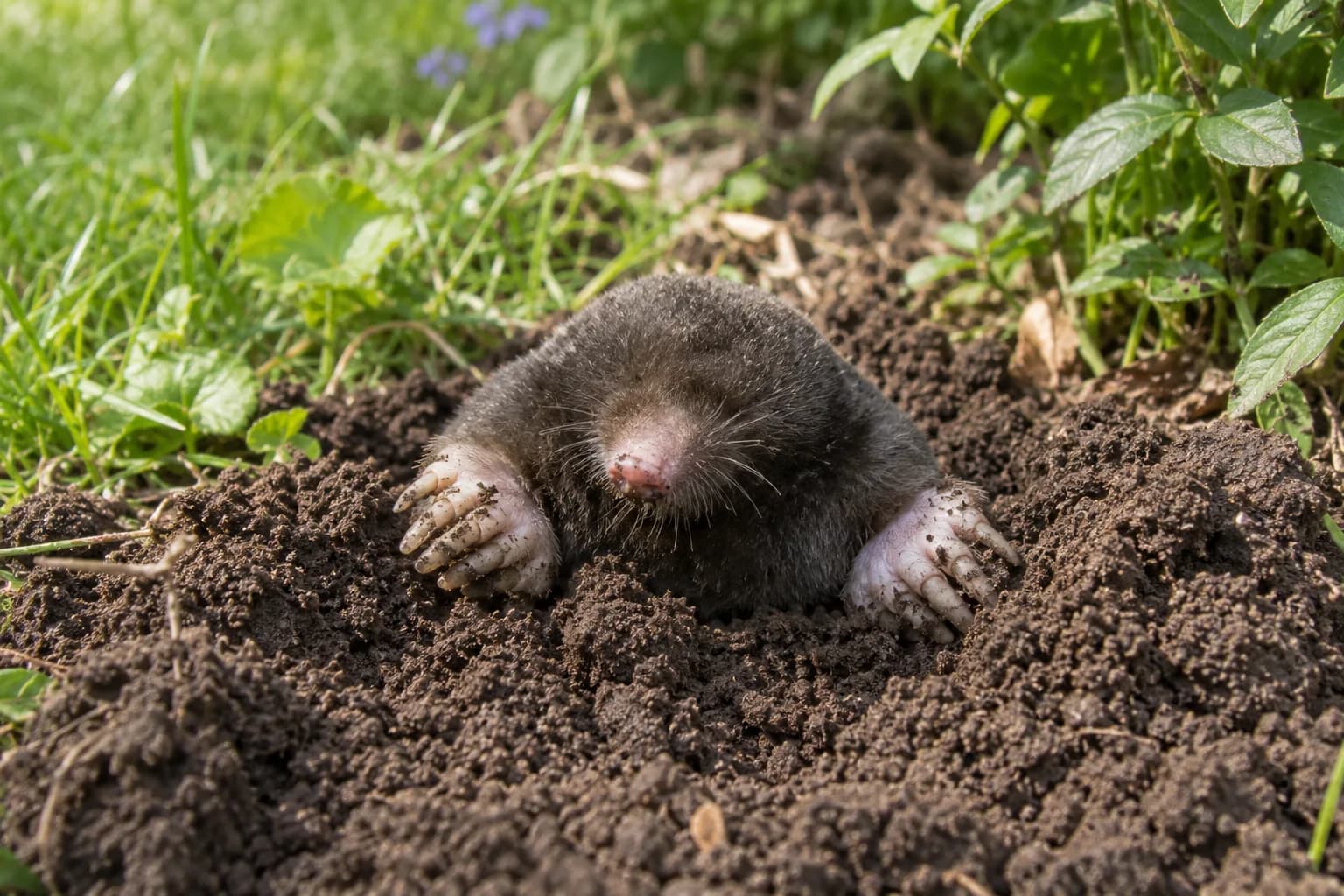 Moles have big, spade-like front feet built for digging. They eat earthworms and grubs, not plants.
Regional variations in Mole Activity Across the US.
In the Southeast, moles are active throughout the year but peak in spring and fall. The star-nosed mole is found in wet areas of the Southeast and Northeast. In the arid Southwest and Rocky Mountain regions, moles are less common because dry soils support fewer earthworms. However, irrigated lawns in cities like Denver or Phoenix can still attract moles. Understanding your local species and seasonal patterns helps tailor control efforts. For example, in the South, you may need to trap year-round, while in the North, trapping in fall can prevent winter tunneling. Mole activity varies significantly by region due to climate and soil types. In the Northeast and Midwest, where soils are loamy and moist, moles are most active in spring (March-May) and fall (September-November). The eastern mole is the primary species. In the Pacific Northwest, where soil stays moist year-round, moles can be active even in winter. The coast mole is common there.
How big a mole problem really is.
In How To Get Rid Of Moles, because moles are solitary, several fresh ridges usually mean more than one animal. In How To Get Rid Of Moles, before you hire, walk the yard and flatten a few ridges with your foot, then check back the next day — the ones that are raised again are the active runs a plan should target. In How To Get Rid Of Moles, moles do not eat plants; they tunnel for earthworms, grubs, and soil insects, and the ridges they leave behind are what most people notice. In How To Get Rid Of Moles, tunnels often run just under the surface, with deeper nesting chambers below, and a single mole can maintain an extensive system across a yard.
What affects the price
- Size of property: larger lawns require more traps and visits.
- Severity of infestation: multiple moles or complex tunnel systems increase cost.
- Accessibility: difficult terrain (slopes, rocky soil) raises labor time.
- Number of visits needed: most programs include 2-4 follow-ups.
- workmanship warranty: companies offering a warranty may charge a premium.
- Geographic region: costs vary by local labor rates and competition.
- Season: spring and fall are peak seasons; prices may be higher.
📊
What is your biggest frustration with mole control?
When to call for help
Attempting to poison or flood tunnels often makes the problem worse by scattering moles. Contact Mole Control at for a no-charge inspection and a complete removal plan. If you see fresh mounds or ridges appearing daily, it's time to call a professional. Moles can be trapped out in 1-3 weeks with proper technique.
What you can do yourself
The cost of a pro ($150–$450) is far less than the cost of repeatedly repairing lawn damage from a persistent infestation. Professionals use specialized traps placed in active tunnels, and they know how to identify which tunnels are currently in use. Professional trapping is the only reliable method because it targets the individual animal. Castor oil repellents may provide temporary relief but rarely eliminate moles. Ultrasonic devices, mothballs, and flooding are ineffective and can harm your lawn. DIY mole control is often a waste of time and money.
Where you live matters
Property managers in the Midwest (e.g., Ohio, Indiana) often face moles after heavy spring rains, when earthworms come to the surface. In the West, irrigated lawns in otherwise dry areas create a perfect habitat. No matter where you live, professional trapping is the most effective solution. Coverage and licensing vary by state, so confirm them with the provider you choose. Mole problems occur in every US state, but the severity and species vary. Homeowners in the Northeast and Midwest deal primarily with the eastern mole, which creates extensive surface tunnels in spring and fall. In the Pacific Northwest, the coast mole is notorious for damaging lawns and golf courses, often requiring multiple trapping visits. Southern states like Georgia and Texas see year-round activity, though peak times still align with wet seasons.
Simple ways to keep moles away
- Reduce soil moisture: avoid overwatering in spring and fall when moles are most active.
- Control grubs: apply beneficial nematodes or milky spore to reduce food sources.
- Install physical barriers: bury 1/4-inch hardware cloth 2-3 feet deep along property lines (only for new lawns).
- Maintain healthy turf: thick, well-fertilized grass is more tolerant of tunneling.
- Remove thatch: thick thatch provides cover for earthworms and grubs.
- Avoid over-fertilizing: too much nitrogen attracts earthworms.
- Monitor regularly: walk your lawn weekly during peak seasons to spot new activity early.
 Ask what the quote covers if another mole moves in after the first one is caught.
Did you know?
Moles can maintain an extensive tunnel system in loose, moist soil—that's faster than a person can walk.
A mole's can store extra earthworms, allowing the mole to store them alive in underground larders for later consumption.
Moles have an extra thumb on each front paw, a unique adaptation for digging.
Questions people ask
Do moles eat plant roots?
No, moles are insectivores and feed primarily on earthworms, grubs, and other soil insects. They do not eat plant roots. Damage to plants is indirect, caused by tunneling that dries out roots or exposes them to air.
How fast do moles dig?
A mole can maintain an extensive tunnel system in suitable soil, but they dig quickly through soft soil. They can create long stretches of new tunnel in a single day.
What is the best way to get rid of moles?
Professional trapping is the most effective and reliable method. DIY repellents and poisons rarely work. A licensed technician can trap moles in 1-3 weeks with a workmanship warranty.
How much does professional mole control cost?
Typical trapping programs range from $150 to $450, depending on property size, infestation severity, and number of visits. Many companies offer no-charge inspection and a warranty.
Are moles active in winter?
In mild climates or during warm spells, moles remain active year-round. In colder regions, they dig deeper tunnels below the frost line and continue feeding. Surface activity may decrease but doesn't stop entirely.
Can moles damage my foundation?
Mole tunnels can undermine patios, walkways, and foundations if they are extensive. Deep tunnels may cause soil settling. Professional removal prevents structural damage.
How many moles live in a yard?
Moles are solitary. One mole typically holds a territory of several thousand square feet. If you see multiple active areas, there may be 2-3 moles, but rarely more. Trapping one mole often solves the problem.
Will removing grubs get rid of moles?
Grub control reduces a food source but won't eliminate moles because they also eat earthworms. It's best used as a preventive measure after trapping, not as a standalone solution.
Do ultrasonic mole repellers work?
No. In How To Get Rid Of Moles, there is no scientific evidence that ultrasonic or vibrating devices repel moles, and extension offices consistently advise against relying on them. In How To Get Rid Of Moles, moles have poor eyesight and live almost entirely underground, where airborne sound barely reaches them. In How To Get Rid Of Moles, if you try a sonic stake, watch for fresh ridges over two weeks; if activity continues, switch to traps in the active runs.
Sources (5)
The facts in this article come from the public sources listed above. Every home is different, so ask the company you talk to about pricing and what’s included. Published by Mole Exterminator · Updated September 11, 2026 · How we write these guides