The short version
Moles are usually one to three animals. Find an active tunnel, then trap it. Repellents and sonic stakes rarely work.
- Usually one to three moles.
- Find an active runway first.
- Traps work best; repellents rarely do.
- Moles eat earthworms, not plants.
- Fix the lawn after trapping.
Anyone in Roswell watching their lawn get dug up.
What to look for
Moles don't eat plants. They hunt earthworms and grubs. Their tunnels lift turf, dry out roots and trip people up. Moles around Roswell are busiest in spring and fall. They tunnel near the surface after rain. One mole can dig a lot of tunnel.
- 1Raised ridges across the lawn.
- 2Round, volcano-shaped dirt mounds.
- 3Spongy patches underfoot.
- 4Tunnels along walkways and beds.
- 5Fresh mounds after rain.
- 6Dead turf strips over tunnels.
Why it’s worth acting soon
- Tunnels spread across the lawn.
- Mounds make mowing harder.
- Ridges become trip hazards.
- New moles move into empty tunnels.
Treatment options and typical costs
Runway Identification and Activity Survey
$75–$200
Not every ridge is active. Moles abandon many feeding tunnels after one pass. The survey finds the main runways connecting nests to feeding areas. Those straight, long-used tunnels are where control in Roswell works best.
- Time
- 45–90 minutes
- Best for
- Every job; trapping fails without it
Lawn, Moisture, and Bed Exclusion Work
$150–$450 depending on scope
A pro may suggest aerating and fixing wet spots. Drier, firmer soil holds fewer worms near the surface. That makes the yard a poorer feeding ground.
- Time
- 1–4 hours
- Best for
- Repeat problems; protecting beds and small areas
Active-Runway Trapping
$150–$400 per visit; multi-visit plans $300–$900
Expect a provider to explain which trap type they use and why it suits your soil. Sandy or rocky ground may favor one style over another. Whatever the style, success in Roswell depends on rechecking and relocating traps that miss.
- Time
- 30–60 minutes per visit, over several visits
- Best for
- Most yards; the most reliable method
Mole-Labeled Baits
$100–$300 per application
In larger Roswell properties where trapping every runway is impractical, mole-labeled baits can reach tunnels traps cannot cover. They go into active tunnels and the openings are closed. Pets and children should be kept off treated Roswell runways per the label.
- Time
- 30–45 minutes
- Best for
- Large or hard-to-trap areas; used exactly as labeled
Prices are typical published ranges. Ask what’s included before you compare quotes.
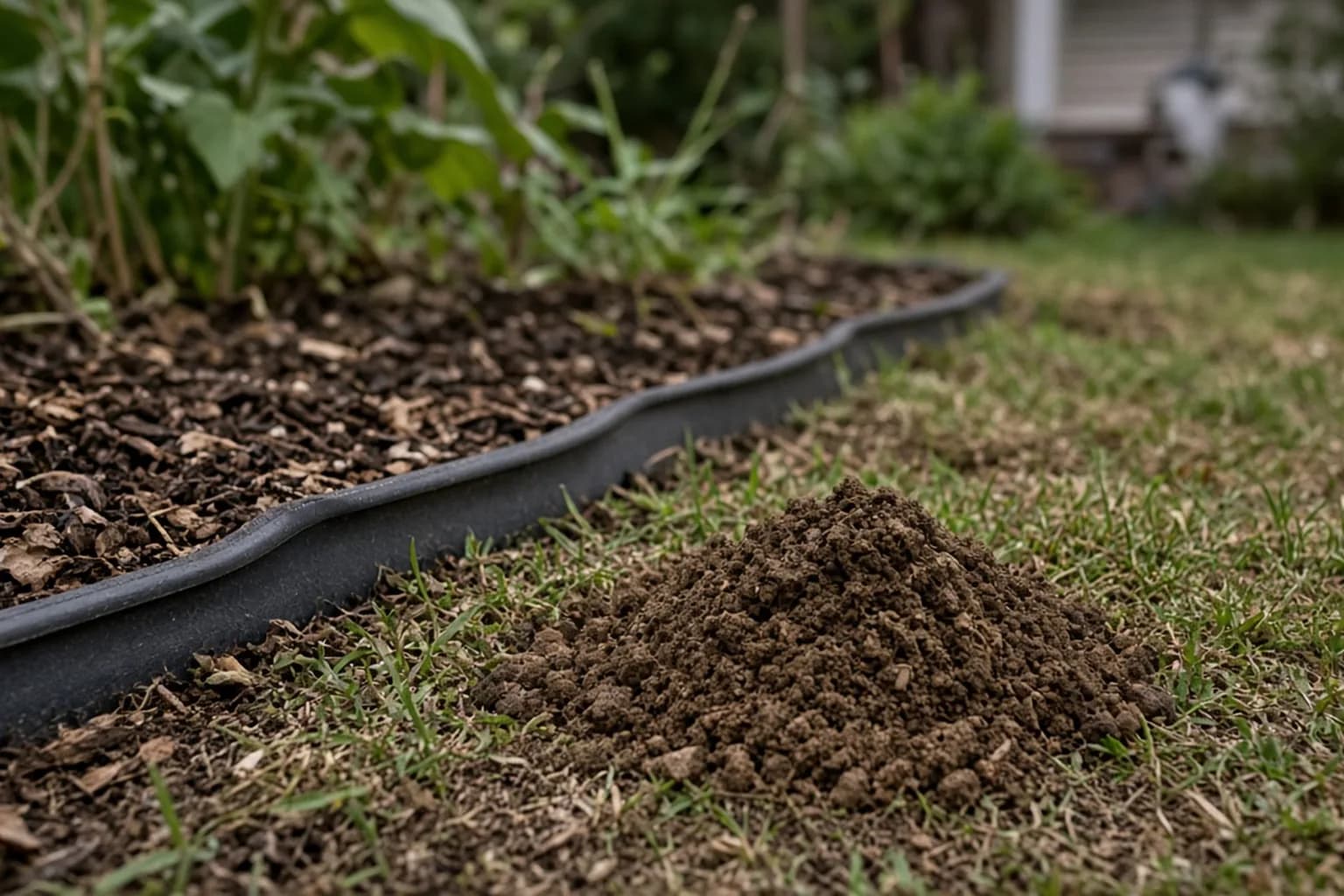 Main runways often follow edges like beds, walks and fences. That's where traps work best.
Which moles live around Roswell.
It's gray, about six inches long, with big spade-like front feet. Moles are insectivores, not rodents. They eat earthworms and grubs, not roots. The eastern mole is the one digging up lawns around Roswell.
When they tunnel.
Mild winters keep them near the surface. Summer heat and drought also push them down.
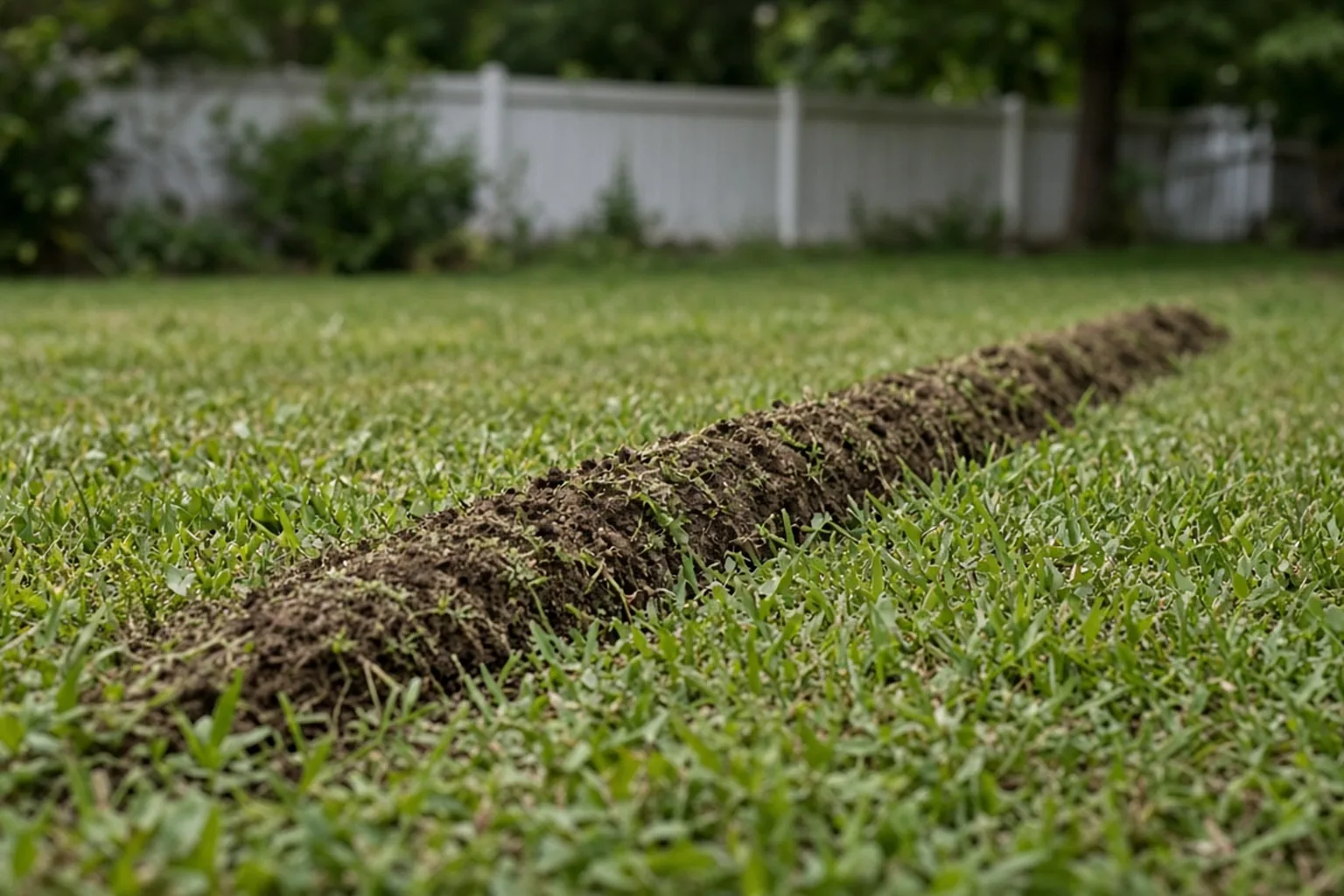 Raised ridges are feeding tunnels just under the turf. Many are used once and abandoned.
Finding an active tunnel.
Step down a short stretch of tunnel and mark it. Check it in a day or two. If it's raised again, it's active. Main runways often follow edges: walks, fences and beds. Lawns from Roswell out to Alpharetta and Sandy Springs show the same pattern. Look for fresh ridges and mounds after rain.
A year of moles in Roswell.
- Spring: peak tunneling. Best time to trap. - Winter: mild in Roswell. Moles stay active. - Fall: a second burst near the surface. - Summer: highs near 89°F in Roswell push moles deeper.
Mole, gopher or vole?
- Mole: raised ridges and round, volcano-like mounds. - Damage: moles don’t eat plants; gophers and voles do. - Vole: surface runways and small holes in the grass. - Gopher: crescent-shaped mounds with a plugged hole.
What works, and what doesn’t.
- Works: traps set in active runways. - Rarely alone: grub control, since they mostly eat earthworms. - Rarely: castor oil, sonic stakes, gum or flooding. - Sometimes: labeled baits, used deep in tunnels.
Protecting garden beds.
Raised beds can get a mesh floor before you fill them. Bend the bottom edge outward. Bury quarter-inch hardware cloth around beds, about two feet deep. It's work up front, but it lasts for years.
Lawn care that helps.
Healthy turf recovers from tunnels faster. Constantly wet lawns draw earthworms, and moles follow. Water deeply but less often. Grub control alone rarely moves moles on.
Signs the problem is over.
- No new mounds for two weeks. - New ridges? Another mole may have moved in. - Traps stay untouched for several checks. - Stepped-down runways stay flat.
Choosing a trap.
- Scissor traps: set straddling an active runway. - Rules: check what your state allows first. - Placement: main runways beat fresh feeding ridges. - Tunnel traps: sit inside a dug-out runway. - Harpoon traps: set on top of a pressed-down ridge.
Mole myths.
- Chewing gum in tunnels: no evidence it works. - Flooding tunnels: they just dig new ones. - Many mounds, many moles: usually it’s one or two. - Moles eat bulbs: no, voles using their tunnels do. - Castor oil: may move them briefly, not away.
Moles aren’t all bad.
A mole in a field may be fine to leave. They eat grubs and other insect larvae. Moles loosen and aerate soil. In a front lawn or garden, most people want them gone.
Fixing the lawn afterward.
Water to settle the soil. Rake mounds flat and step ridges down. Wait until the mole is caught. Overseed bare spots in spring or fall.
Moles, kids and pets.
Baits must go deep in tunnels, exactly as the label says. Keep kids and pets away from traps. Moles don't bite unless handled. Digging dogs can wreck a lawn faster than moles.
What a mole visit looks like.
Traps go into the main runways. They test which runways are active. The tech walks the lawn and maps the tunnels. They check traps every day or two.
Moles, voles or gophers?
- Moles: raised ridges and round, volcano-shaped mounds. - Chipmunks: small clean holes with no soil around them. - Gophers: crescent-shaped mounds with a plugged hole. - Voles: narrow surface runways through the grass.
Watering and moles.
Water deeply and less often instead of a little every day. Moles follow moist soil, where worms rise near the surface. Fix leaky sprinklers that leave soggy corners.
Flower beds and borders.
Plants wilt when their roots are left hanging in air pockets. Moles tunnel under beds looking for worms, not to eat plants. Press tunnels down firmly and water to settle the soil.
Questions to ask before you sign.
- Is it a mole, gopher or vole? - Is lawn repair included? - What if another mole moves in? - How often will you check traps? - Which method will you use?
Moles by the numbers.
Across Roswell, tunnels often run just under the surface, with deeper nesting chambers below, and a single mole can maintain an extensive system across a yard. Across Roswell, because moles are solitary, several fresh ridges usually mean more than one animal. Across Roswell, before you hire, walk the yard and flatten a few ridges with your foot, then check back the next day — the ones that are raised again are the active runs a plan should target. Across Roswell, moles do not eat plants; they tunnel for earthworms, grubs, and soil insects, and the ridges they leave behind are what most people notice.
Mole ridges vs. other lawn damage in Roswell.
That distinguishes them from gopher mounds, which are fan-shaped with a plugged entrance, and from voles, which leave shallow surface runways through the grass. Around Roswell, GA, 54 inches of rain a year and soft, moist soil make tunneling easier, so ridges can appear quickly after a wet spell. Identifying the ridges correctly is what keeps you from treating for the wrong animal. Mole tunnels leave raised, linear ridges just under the surface, and the soil has no obvious entrance hole because moles are nearly always underground.
What a mole control job should cost in Roswell.
Across Roswell, a small yard with one or two active tunnels is a small job; a large lot with tunneling across a wide area costs more because it takes more traps and more return visits. Across Roswell, ask for a written quote that spells out the number of visits, the method, and what the follow-up covers, rather than a single flat number. Mole control is priced by how many active tunnels there are and how much ground the animal is using, not by how many animals you can count.
Why mole problems come back after removal.
That is why removal alone rarely holds: if the food and the tunnel access are still there, a new mole will simply re-colonize the same tunnels. Moles are solitary, but the space they leave is quickly filled by the next animal that moves in from neighboring yards or open ground. The long-term fix pairs removal with habitat changes, like limiting the grubs and earthworms moles feed on and keeping nearby overgrown areas trimmed, so your yard stops being the easiest target on the block.
What affects the price
- Irrigation and drainage corrections.
- Mole-labeled bait applications added to trapping.
- Number of moles present on the property.
- Seasonal monitoring plans versus one-time service.
- Single visit versus a multi-visit trapping plan.
- Access around fences, slopes, and dense plantings.
📊
What bothers you most about moles?
When to call for help
Call if new mounds keep appearing for more than a week. if you can't find an active runway. A pro can usually catch the mole within a few visits.
What you can do yourself
Skip sonic stakes, gum and flooding. Set the trap exactly as the instructions say. Trapping yourself can work.
Moles in Roswell
In Roswell's neighborhoods, irrigated lawns and garden beds are favorite spots. Winters around Roswell are mild enough that moles can stay active near the surface. With about 54 inches of rain a year, Roswell keeps soil soft and full of earthworms, which moles love.
Local research
Moles in Roswell, GA: what the public record shows
Before you compare quotes, it helps to know which moles actually live in Georgia, when they are busiest around Roswell, and what the state figures look like. Everything below links to the agency or university page it came from.
Mole species recorded in Georgia
- Eastern mole (Scalopus aquaticus) — Range across most of the eastern U.S. to Wyoming and Colorado; the only mole in Missouri.
- Star-nosed mole (Condylura cristata) — Northeast and Great Lakes; wet soils; up to 7 young.
When moles are busiest around Roswell
Mating in late winter and early spring; two to five young leave the nest at about four weeks.
Georgia DNR notes a male's home range averages 2.7 acres and a female's about 0.7 acre, so a single yard's tunnels are usually one animal's work.
Rules that apply in Georgia
Sources: Georgia Department of Natural Resources, Wildlife Resources Division; Moles; Virginia Cooperative Extension (Virginia Tech). Figures are quoted as the source prints them. How we check our sources
Simple ways to keep moles away
- Edge beds with buried hardware cloth.
- Check for fresh mounds after rain.
- Act early in spring.
- Fix tunnels only after trapping.
- Skip sonic stakes and castor oil.
 A quick sketch of where fresh mounds appear helps pinpoint the active runways.
Did you know?
Moles can tunnel quickly through soft soil in soft soil
Mole saliva paralyzes earthworms for later storage
Questions people ask
Why do repellents and sonic stakes not work on moles?
Moles get used to them or tunnel around them. Studies show little lasting effect.
Will grub control get rid of moles?
Killing grubs alone usually doesn't move them on. Earthworms are their main food. Rarely.
How long does professional mole control take?
Usually one to three weeks of regular trap checks.
Will moles come back after they are removed?
New moles can move into empty tunnels. Catching newcomers early keeps damage small.
How many moles are in my yard?
Usually just one to three.
When are moles most active in Roswell?
Spring and fall, especially after rain. Mild winters keep some activity going year-round.
Are moles common in Roswell?
Yes.
Nearby cities
Related guides
Sources (5)
The facts in this article come from the public sources listed above. Every home is different, so ask the company you talk to about pricing and what’s included. Published by Mole Exterminator · Updated September 11, 2026 · How we write these guides