The short version
True moles are rare here; check for gophers or voles. Find an active tunnel, then trap it. Repellents and sonic stakes rarely work.
- Usually one to three moles.
- Find an active runway first.
- Traps work best; repellents rarely do.
- Moles eat earthworms, not plants.
- Fix the lawn after trapping.
Homeowners in Mandan with tunnels, ridges or mounds in the lawn.
What to look for
Moles don't eat plants. They hunt earthworms and grubs. Their tunnels lift turf, dry out roots and trip people up. Gophers and voles here are busiest in spring and fall. One mole can dig a lot of tunnel.
- 1Raised ridges across the lawn.
- 2Round, volcano-shaped dirt mounds.
- 3Spongy patches underfoot.
- 4Tunnels along walkways and beds.
- 5Fresh mounds after rain.
- 6Dead turf strips over tunnels.
Why it’s worth acting soon
- Tunnels spread across the lawn.
- Mounds make mowing harder.
- Ridges become trip hazards.
- New moles move into empty tunnels.
Treatment options and typical costs
Runway Identification and Activity Survey
$75–$200
A provider in Mandan starts by walking the lawn and separating active runways from exploratory tunnels. Surface ridges get pressed flat and checked the next day. The ones that pop back up are the tunnels worth treating in Mandan.
- Time
- 45–90 minutes
- Best for
- Every job; trapping fails without it
Mole-Labeled Baits
$100–$300 per application
Baits are not a shortcut; they only work in live tunnels. That is why Mandan providers run the flattening test before any bait goes down. Bait in a dead tunnel in Mandan is wasted product.
- Time
- 30–45 minutes
- Best for
- Large or hard-to-trap areas; used exactly as labeled
Active-Runway Trapping
$150–$400 per visit; multi-visit plans $300–$900
Trapping in Mandan is a process rather than a one-time visit. Sets are checked, moved, and repeated until activity stops. Providers around Mandan usually price this as a plan with a set number of visits.
- Time
- 30–60 minutes per visit, over several visits
- Best for
- Most yards; the most reliable method
Follow-Up Monitoring
$50–$150 per visit; often included in plans
Monitoring visits in Mandan are short but important. The provider rechecks flattened tunnels, looks for new mounds, and resets traps on any Mandan runway that reopened. Many Mandan plans include one or two of these visits by default.
- Time
- 20–30 minutes per visit
- Best for
- Every trapping job; confirms the yard is clear
Prices are typical published ranges. Ask what’s included before you compare quotes.
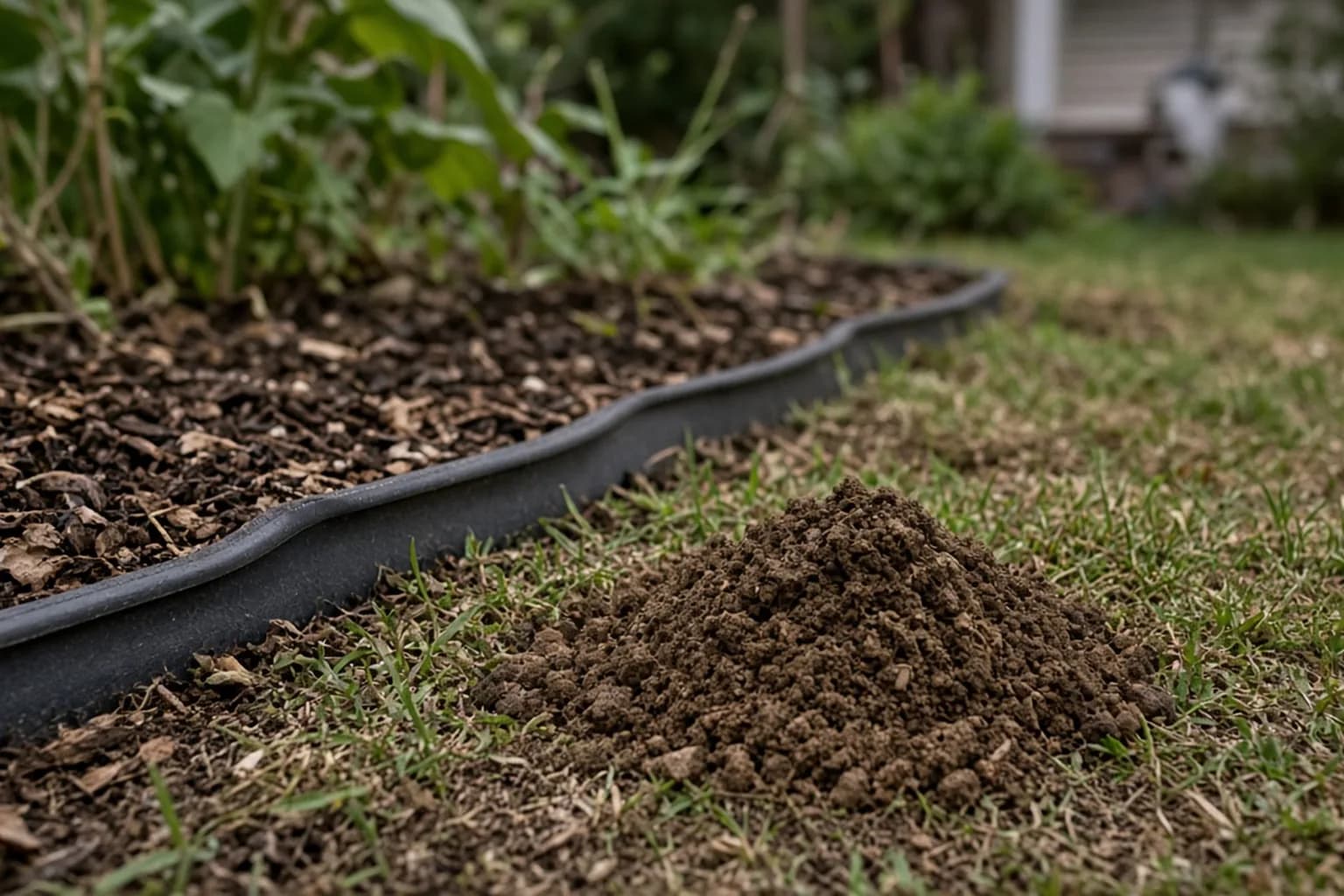 Main runways often follow edges like beds, walks and fences. That's where traps work best.
Which moles live around Mandan.
Shallow runways through the grass point to voles. Both eat plants, so treatment differs from mole trapping. True moles are uncommon around Mandan. Most lawn tunnels and mounds here are pocket gophers or voles. Pocket gophers eat roots and leave crescent-shaped mounds. Voles leave surface runways in the grass. If the mounds around Mandan are crescent-shaped, it's a gopher.
When they tunnel.
Frozen ground in winter sends them deeper. Summer heat and drought also push them down.
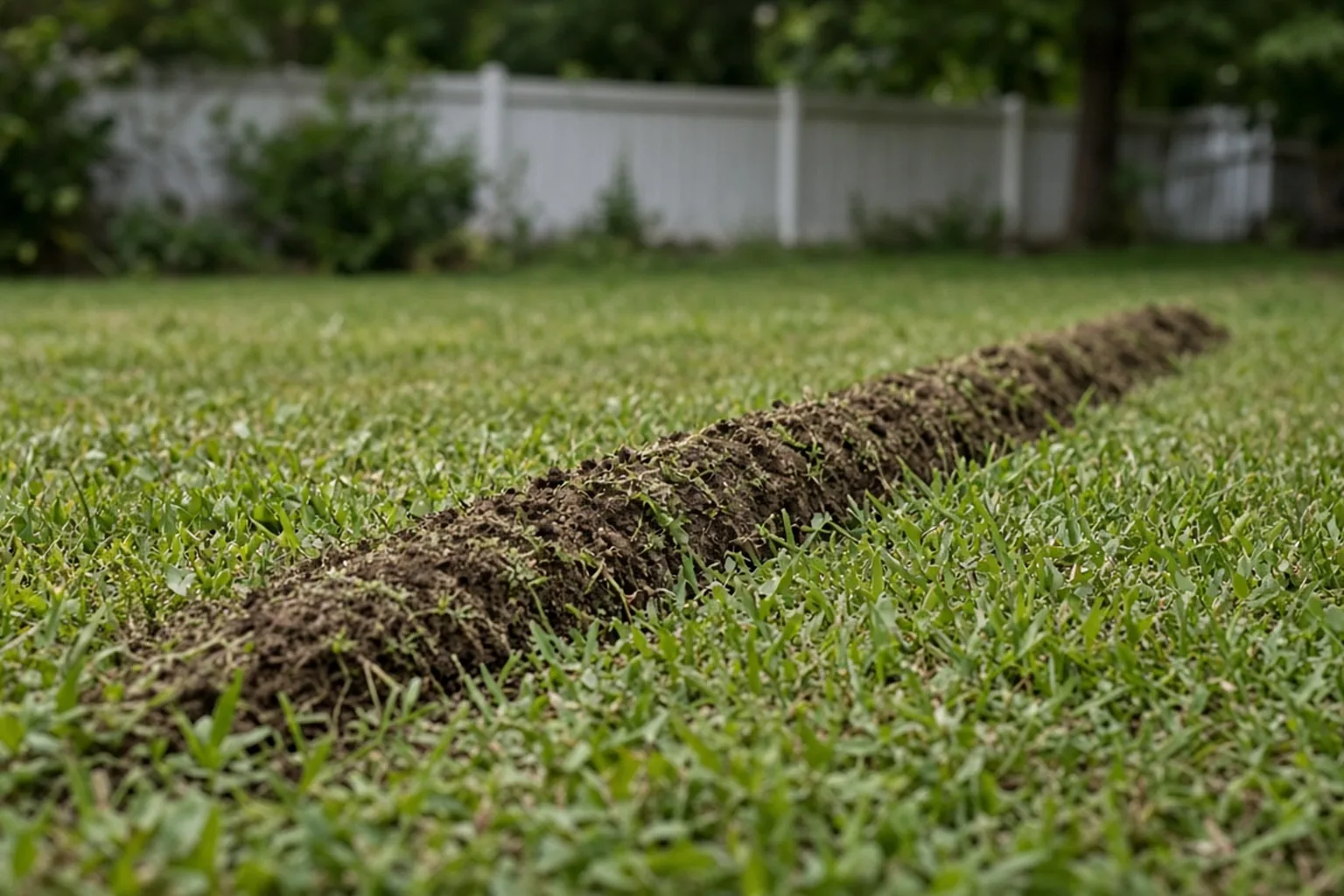 Raised ridges are feeding tunnels just under the turf. Many are used once and abandoned.
Finding an active tunnel.
Look for fresh ridges and mounds after rain. Step down a short stretch of tunnel and mark it. Check it in a day or two. If it's raised again, it's active. Main runways often follow edges: walks, fences and beds. Lawns from Mandan out to Bismarck show the same pattern.
A year of moles in Mandan.
- Summer: highs near 85°F in Mandan push moles deeper. - Fall: a second burst near the surface. - Winter: lows near 2°F in Mandan. Ground freezes; moles go deep. - Spring: peak tunneling. Best time to trap.
Mole, gopher or vole?
- Gopher: crescent-shaped mounds with a plugged hole. - Vole: surface runways and small holes in the grass. - Damage: moles don’t eat plants; gophers and voles do. - Mole: raised ridges and round, volcano-like mounds.
What works, and what doesn’t.
- Sometimes: labeled baits, used deep in tunnels. - Rarely: castor oil, sonic stakes, gum or flooding. - Rarely alone: grub control, since they mostly eat earthworms. - Works: traps set in active runways.
Protecting garden beds.
Raised beds can get a mesh floor before you fill them. It's work up front, but it lasts for years. Bury quarter-inch hardware cloth around beds, about two feet deep. Bend the bottom edge outward.
Lawn care that helps.
Healthy turf recovers from tunnels faster. Grub control alone rarely moves moles on. Water deeply but less often. Constantly wet lawns draw earthworms, and moles follow.
Signs the problem is over.
- Stepped-down runways stay flat. - Traps stay untouched for several checks. - New ridges? Another mole may have moved in. - No new mounds for two weeks.
Choosing a trap.
- Harpoon traps: set on top of a pressed-down ridge. - Tunnel traps: sit inside a dug-out runway. - Placement: main runways beat fresh feeding ridges. - Rules: check what your state allows first. - Scissor traps: set straddling an active runway.
Mole myths.
- Castor oil: may move them briefly, not away. - Moles eat bulbs: no, voles using their tunnels do. - Many mounds, many moles: usually it’s one or two. - Flooding tunnels: they just dig new ones. - Chewing gum in tunnels: no evidence it works.
Moles aren’t all bad.
A mole in a field may be fine to leave. In a front lawn or garden, most people want them gone. Moles loosen and aerate soil. They eat grubs and other insect larvae.
Fixing the lawn afterward.
Water to settle the soil. Overseed bare spots in spring or fall. Wait until the mole is caught. Rake mounds flat and step ridges down.
Moles, kids and pets.
Baits must go deep in tunnels, exactly as the label says. Digging dogs can wreck a lawn faster than moles. Moles don't bite unless handled. Keep kids and pets away from traps.
What a mole visit looks like.
Traps go into the main runways. They check traps every day or two. The tech walks the lawn and maps the tunnels. They test which runways are active.
Moles, voles or gophers?
- Voles: narrow surface runways through the grass. - Gophers: crescent-shaped mounds with a plugged hole. - Chipmunks: small clean holes with no soil around them. - Moles: raised ridges and round, volcano-shaped mounds.
Watering and moles.
Fix leaky sprinklers that leave soggy corners. Moles follow moist soil, where worms rise near the surface. Water deeply and less often instead of a little every day.
Flower beds and borders.
Press tunnels down firmly and water to settle the soil. Moles tunnel under beds looking for worms, not to eat plants. Plants wilt when their roots are left hanging in air pockets.
Questions to ask before you sign.
- Which method will you use? - How often will you check traps? - What if another mole moves in? - Is lawn repair included? - Is it a mole, gopher or vole?
Moles by the numbers.
In Mandan, moles do not eat plants; they tunnel for earthworms, grubs, and soil insects, and the ridges they leave behind are what most people notice. In Mandan, tunnels often run just under the surface, with deeper nesting chambers below, and a single mole can maintain an extensive system across a yard. In Mandan, because moles are solitary, several fresh ridges usually mean more than one animal. In Mandan, before you hire, walk the yard and flatten a few ridges with your foot, then check back the next day — the ones that are raised again are the active runs a plan should target.
What affects the price
- Buried barriers for raised beds or gardens.
- Travel distance to rural properties.
- Access around fences, slopes, and dense plantings.
- Property bordering fields, woods, or streams.
- Soil type: rocky or clay ground slows trap sets.
- Number of moles present on the property.
📊
What bothers you most about moles?
When to call for help
A pro can usually catch the mole within a few visits. Call if new mounds keep appearing for more than a week. if you can't find an active runway.
What you can do yourself
Skip sonic stakes, gum and flooding. Trapping yourself can work. Set the trap exactly as the instructions say.
Moles in Mandan
Winter lows near 2°F in Mandan freeze the ground, so moles go deeper until spring. Around Mandan's open land, pastures and fields hold moles too. Mandan gets about 17 inches of rain a year, so moles favor watered lawns and shady beds.
Local research
Moles in Mandan, ND: what the public record shows
Before you compare quotes, it helps to know which moles actually live in North Dakota, when they are busiest around Mandan, and what the state figures look like. Everything below links to the agency or university page it came from.
When moles are busiest around Mandan
Spring thaw and fall. Great Lakes and Northeast: star-nosed moles favor wet ground; deep tunnels in frost.
Based on Mandan’s humid continental climate profile.
Sources: Internet Center for Wildlife Damage Management; Virginia Cooperative Extension (Virginia Tech). Figures are quoted as the source prints them. How we check our sources
Simple ways to keep moles away
- Edge beds with buried hardware cloth.
- Check for fresh mounds after rain.
- Act early in spring.
- Fix tunnels only after trapping.
- Skip sonic stakes and castor oil.
 Ask what the quote covers if another mole moves in after the first one is caught.
Did you know?
One mole can hold a territory over an acre
A mole tunnel constantly to find food
Questions people ask
How long does professional mole control take?
Usually one to three weeks of regular trap checks.
Do I need a permit to trap moles?
Rules vary by state. Ask a local company what's allowed in North Dakota.
Are mole baits safe around pets and children?
Use them only as the label directs, deep in tunnels. Traps are often the safer choice.
Will grub control get rid of moles?
Earthworms are their main food. Killing grubs alone usually doesn't move them on. Rarely.
Can I just flood the tunnels or fill them in?
It rarely works. Moles dig new tunnels or move a few feet away.
Is an annual mole control contract worth it?
In Mandan, a seasonal contract often costs little more than a single visit while covering the peak activity months. In Mandan, compare what each plan includes and ask whether follow-up visits are covered before you commit. It can be, if the animal keeps coming back.
Is the GopherHawk trap popular for moles?
In Mandan, like any trap, it works only when set in an active run and checked often. In Mandan, choose a trap you can set correctly and check daily, and focus on finding the active tunnel first. In Mandan, the GopherHawk is a commonly discussed scissor-jaw trap, but popularity is not the same as effectiveness.
When are moles most active in Mandan?
Spring and fall, especially after rain. Frozen winter ground sends them deep.
Are moles common in Mandan?
Not very. Around Mandan, gophers and voles cause most lawn damage.
Nearby cities
Related guides
Sources (5)
The facts in this article come from the public sources listed above. Every home is different, so ask the company you talk to about pricing and what’s included. Published by Mole Exterminator · Updated September 11, 2026 · How we write these guides